Buying guide
What microphone do YouTubers use? A guide by video type
The microphones creators use for desk videos, vlogging, interviews, voice-over, gaming streams and music, with the trade-offs between shotgun, lavalier, wireless, dynamic, condenser and USB mics.
Short answer What microphone do YouTubers use? It depends on the format: dynamic broadcast mics such as the Shure SM7dB or RODE PodMic for desk and gaming videos, on-camera shotguns or wireless lavaliers for vlogs, two-person wireless kits for interviews, and condensers for voice-over in a quiet room. The common thread is getting the mic close to the speaker and choosing a pickup pattern that ignores the room.
There is no single best microphone for YouTube, because a desk review, a travel vlog and a guitar cover need different tools. The mic that works for a gamer in a noisy bedroom will sound wrong clipped to a hiker. This guide works through the common video types, what each needs, and the gear creators use for it.
You can browse every type in our microphones range. Specifications come from RODE, Shure, Focusrite and Audio-Technica product pages and manuals.
The main microphone types for video
| Type | How it picks up | Strengths | Trade-offs |
|---|---|---|---|
| Dynamic broadcast mic | Close to the mouth, rejects the room | Forgiving in untreated rooms, handles loud voices | Visible in shot, needs to sit close, some need plenty of gain |
| Shotgun mic | Directional, on camera or on a boom out of frame | Keeps the frame clean, quick to set up | Picks up more room sound as distance grows |
| Lavalier and wireless kit | Clipped on the chest | Consistent level as the speaker or camera moves | Clothing rustle, batteries to manage |
| Condenser (studio) | Detailed, sensitive | Voice-over, singing, acoustic instruments | Also captures fans, traffic and echo |
| USB mic | Any of the above, with a built-in interface | Plugs straight into a computer | Harder to expand to several mics |
What microphone do YouTubers use for each video type
Talking head at a desk
For reviews, tutorials, commentary and podcasts on camera, many creators use a dynamic broadcast mic on a boom arm, a few centimetres from the mouth and just below the frame. Dynamic mics reject much of the room, which suits ordinary bedrooms and home offices. If you want a clean shot with no mic visible, a shotgun on a stand just out of frame is the alternative, but it works best in a quiet room.
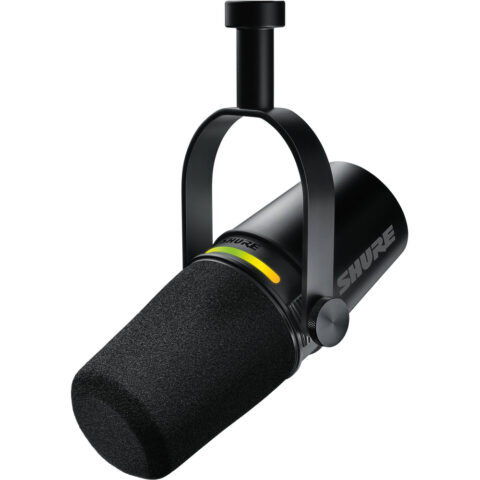
The Shure SM7dB is a dynamic vocal mic with a built-in preamp that adds +18 dB or +28 dB of gain. That matters because Shure recommends at least 60 dB of clean gain for the standard SM7B, more than many entry interfaces provide. The RODE PodMic USB is a dynamic mic with both USB-C and XLR outputs, a built-in preamp and a headphone output, so it works straight into a computer now and into an interface later.
Desk and streaming microphones


Vlogging
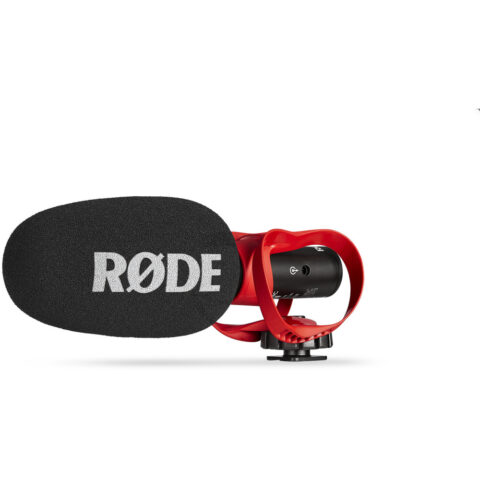
A microphone for vlogging has to be light and quick. The simplest option is an on-camera shotgun. RODE's VideoMic GO II is a supercardioid mic that weighs 33 g and has both a 3.5 mm output for cameras and a USB-C output that records 24-bit/48 kHz on computers and compatible phones. On-camera mics sound good at arm's length but lose clarity as the camera moves further away.
When you walk and talk, or set the camera down a few metres away, a wireless lavalier keeps your voice at a steady level. Two-transmitter kits such as the DJI Mic Mini 2 or RODE Wireless GO also let you add a second person later. Browse our shotgun microphones for on-camera options.
Interviews
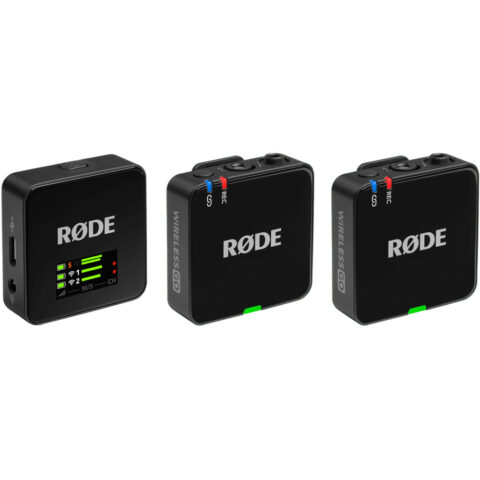
For two people, use one transmitter per person and record each to its own channel where you can, so you can balance them in the edit. Flagship kits add on-board recording in each transmitter as a backup. RODE's Wireless GO (Gen 3) records 32-bit float in each transmitter and quotes up to 260 m line of sight range. Our DJI Mic 3 vs RODE Wireless PRO vs Lark Max 2 comparison goes deeper.
For street interviews and vox pops, a handheld adapter such as RODE's Interview GO turns a Wireless GO transmitter into a handheld mic you can point at each guest in turn. It also makes it obvious to passers-by that you are recording.
Vlogging and interview microphones
-
 RODE
RODE VideoMic GO II Shotgun Microphone
$153.95 incl. GST Ships in 2-3 weeksAdd to cart -
 Sennheiser
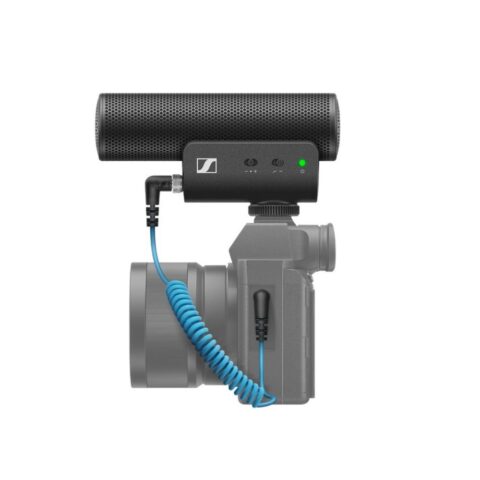
 MKE 400 Highly Directional Super-Cardioid Shotgun Microphone
$292.95 incl. GST Ships in 1-2 business daysAdd to cart -
 RODE
RODE Wireless GO Compact Wireless Microphone System (Gen 3)
$265.95 incl. GST Ships in 1-2 business daysAdd to cart -
 DJI
DJI Mic Mini 2 Wireless Microphone System with Charging Case (2TX+1RX)
$143.95 incl. GST Ships in 1-2 business daysAdd to cart
Voice-over
A voice over microphone depends more on your room than your budget. A large-diaphragm condenser captures detail and air, but it also captures computer fans, traffic and the echo of bare walls. In a treated space, or a wardrobe full of clothes, a condenser such as the RODE NT1 5th Generation gives a clear, open sound. It has both XLR and USB-C outputs, and over USB it records 32-bit float at up to 192 kHz. In an untreated room, a dynamic mic used close up often gives a cleaner result.
Gaming and streaming
A microphone for gaming streams has to ignore keyboard clatter, fans and the game audio in your headphones. A cardioid dynamic mic on a boom arm, close to your mouth, handles this well. Useful extras are a mute button, a headphone output for monitoring and easy gain control. The Shure MV7 is a dynamic mic with USB and XLR outputs; Shure notes its app processing applies to the USB output, while the XLR output is passive. A boom arm keeps the mic close without cluttering the desk.
If you capture a console or camera as well as your voice, RODE's Streamer X combines a microphone input and a headset input with an HDMI capture card in one desktop unit.
Music
Music videos use the same tools as a home studio. Condensers suit vocals and acoustic instruments in a quiet room, while dynamic instrument mics like the Shure SM57 handle guitar amps, snare drums and other loud sources. Most music setups use XLR mics into an audio interface, so you can add channels as the band grows. See our large-diaphragm condenser mics.
USB or XLR for YouTube
A USB mic has its preamp and converter built in and plugs straight into a computer. An XLR mic needs an audio interface or mixer, which adds cost but lets you upgrade the mic and interface separately and record several people at once. Hybrid mics such as the RODE PodMic USB and Shure MV7 give you both.
- One person, one computer: USB or hybrid is simplest.
- Two or more people: XLR mics into a multi-input interface or mixer.
- Planning to grow: a hybrid mic now, an interface later.
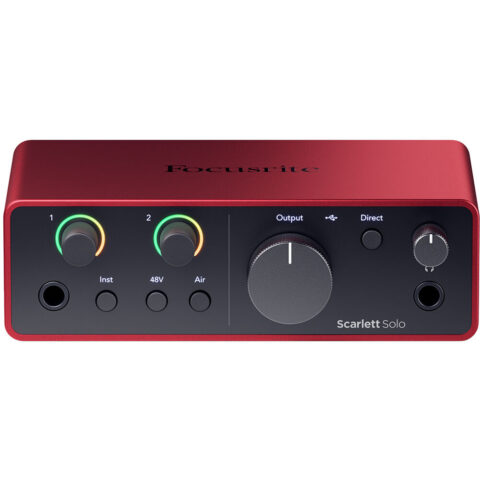
A compact interface like the Focusrite Scarlett Solo 4th Gen provides up to 57 dB of gain and 48 V phantom power for condensers. Our USB vs XLR microphone guide explains the trade-offs in detail.
Voice-over and studio options
-
 RODE
Rode NT1 5th Gen Digital Condenser Microphone with XLR Output, USB & DSP (Black)
$332.95 incl. GST Ships in 1-2 business daysAdd to cart -
 Audio Technica
 AT2020USB-X Cardioid Condenser USB Microphone
$228.95 incl. GST Ships in 2-4 weeksAdd to cart -
 Focusrite
 Scarlett Solo USB-C Audio Interface (4th Generation)
$211.95 incl. GST Ships in 1-2 business daysAdd to cart
Setup tips that matter more than the mic
- Distance first. Moving a mic closer improves sound more than a costlier mic further away. Dynamic broadcast mics work best within a hand's width of the mouth.
- Tame the room. Rugs, curtains, bookshelves and soft furniture cut echo. Avoid recording in a bare room with hard walls.
- Aim slightly off axis. Pointing the mic across your mouth, rather than straight at it, reduces popping on P and B sounds. A pop filter helps too.
- Clip lavs carefully. Place them on the upper chest, clear of jewellery, hair and loose fabric.
- Monitor on headphones. Most of the mics above have a headphone output so you can hear problems before you publish.
Good sound pairs with good light. See our guide to lighting for YouTube videos. Prices include GST and shipping is free Australia-wide.
Questions
What is a good first microphone for a new YouTube channel?
Match it to your format. For desk videos, a USB or hybrid dynamic mic on a boom arm is the simplest start. For vlogs, an on-camera shotgun such as the RODE VideoMic GO II, or a wireless lav kit if you move around. You can add an interface or second mic later as the channel grows.
Why do so many streamers use dynamic mics?
Dynamic mics pick up mostly what is close to them, so keyboard noise, computer fans and room echo are less obvious. That suits the untreated bedrooms and offices most streamers work in. Some, like the standard Shure SM7B, need a lot of gain, which is why models with built-in preamps such as the SM7dB appeal.
Is a condenser microphone good for YouTube?
In a quiet, treated room, yes, especially for voice-over and music, because condensers capture more detail. In an ordinary room they also capture traffic, fans and echo, which can make speech sound distant. If your room is noisy or bare, a dynamic mic used close up is usually the more forgiving choice.
Do I need a separate mic for vlogging and desk videos?
Often, yes. A desk mic on a boom arm is too bulky to carry, and an on-camera shotgun is less focused at a desk than a close dynamic mic. A wireless lav kit can bridge both, working clipped on at a desk and on the move, which is why many creators start there.
Sources
Specifications and background were checked against these pages when the guide was last updated. Always confirm compatibility on the product page before ordering.
- shure.com/en-US/products/microphones/sm7db
- shure.com/en-US/docs/guide/SM7B
- shure.com/en-US/docs/guide/MV7
- rode.com/en-us/products/podmic-usb
- edge.rode.com/pdf/products/849/VideoMic%20Go%20II_Datasheet_FA.pdf
- rode.com/en-us/products/wireless-go-gen-3
- rode.com/en-us/user-guides/nt1-5th-generation
- focusrite.com/products/scarlett-solo