Buying guide
Shure SM7B vs SM7dB vs RODE PodMic: What Else You Need
Shure SM7B, SM7dB and RODE PodMic compared on sensitivity, gain needs and phantom power, plus the interfaces, inline preamps, boom arms and pop filters that complete the setup.
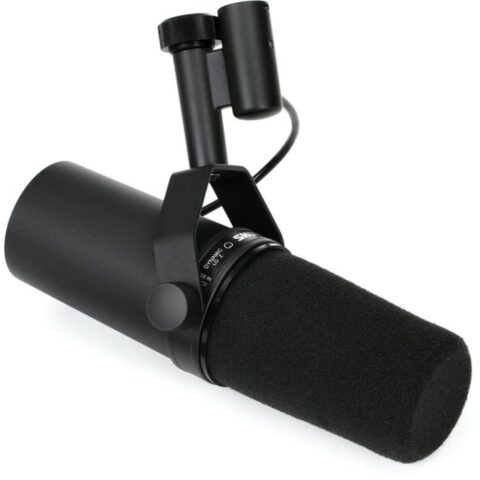
Short answer The Shure SM7B and SM7dB share the same dynamic design, but the SM7dB adds a built-in preamp with +18 dB or +28 dB of boost, powered by 48 V phantom power. That makes the SM7dB easier to run from modest interfaces, while the passive SM7B needs a high-gain preamp or an inline booster. The RODE PodMic is a lower-cost broadcast dynamic with similar low output, so it has the same gain needs as the SM7B.
If you are weighing up the Shure SM7B vs SM7dB, the microphone is only half the decision. What you plug it into, how you mount it and how much gain your preamp has will shape the result just as much. This guide compares the three microphones, then covers the interfaces, inline preamps, boom arms and pop filters that go with them.
Shure SM7B vs SM7dB vs RODE PodMic: the specifications
All three are end-address dynamic microphones built for close speech. The figures below come from Shure and RODE documentation.
| Specification | Shure SM7B | Shure SM7dB | RODE PodMic |
|---|---|---|---|
| Type | Cardioid dynamic | Cardioid dynamic with built-in preamp | Cardioid dynamic |
| Sensitivity | -59 dBV/Pa | -59 dBV/Pa bypassed, -41 dBV/Pa at +18 dB, -31 dBV/Pa at +28 dB | -57 dB re 1 V/Pa |
| Frequency response | 50 Hz to 20 kHz | 50 Hz to 20 kHz | 50 Hz to 13 kHz (current datasheet) |
| Phantom power | Not required | 48 V required when the preamp is on | Not required |
| Tone switches | Bass roll-off, presence boost | Bass roll-off, presence boost | None listed |
| Weight | 764 g | About 837 g | 937 g |
| Output | XLR | XLR | XLR |
The practical differences are clear from the table. The SM7B and SM7dB sound alike because they share a capsule, and both have switches for bass roll-off and a presence boost for a brighter midrange. The SM7dB simply raises its own output before the signal reaches your interface. The PodMic is a little more sensitive than a bypassed SM7B on paper but is still a low-output microphone, and it has an integrated swing mount so it attaches directly to a boom arm.
Microphones compared in this guide
-
 Shure
Shure SM7B Studio Vocal Dynamic Microphone
$958.95 incl. GST Ships in 1-2 business daysAdd to cart -
 Shure
Shure SM7dB Dynamic Vocal Microphone
$832.95 incl. GST Ships in 4-6 weeksAdd to cart -
 RODE
Rode PodMic Dynamic Podcasting Microphone
$129.95 incl. GST Ships in 1-2 business daysAdd to cart -
 RODE
Rode PodMic USB Microphone
$275.95 incl. GST Ships in 1-2 business daysAdd to cart
SM7B gain: how much you really need
You will often read that the SM7B needs about 60 dB of gain. That is a rule of thumb, not a Shure specification. Because the SM7B is only -59 dBV/Pa, quiet or softly spoken voices commonly need somewhere around 50 to 60 dB of clean gain to reach a healthy recording level. A loud voice right on the microphone needs less.
How much you need depends on:
- How loudly the person speaks and how close they sit.
- The maximum gain your interface or console offers.
- How quiet that preamp is near the top of its range.
- How much headroom you want to leave for laughs and raised voices.
The PodMic's figure is not far off, so plan for similar gain. A useful habit is to check the interface's maximum gain before buying either microphone.
Preamp gain on common interfaces and consoles
| Device | Maximum mic gain (manufacturer figure) | Mic inputs |
|---|---|---|
| Focusrite Scarlett Solo 4th Gen | 57 dB | 1 |
| MOTU M2 | 60 dB | 2 |
| SSL 2 MkII | 64 dB | 2 |
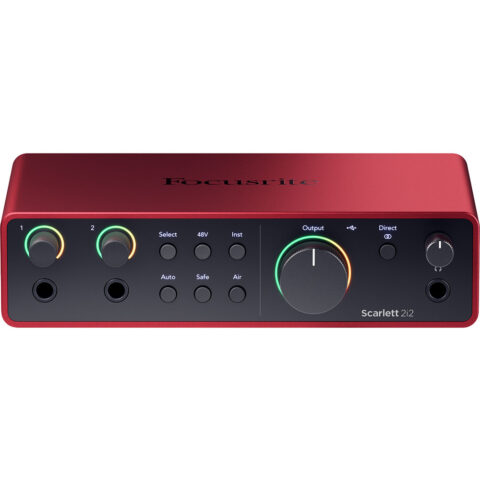
| Focusrite Scarlett 2i2 4th Gen | 69 dB | 2 |
| Zoom PodTrak P4next | Up to 70 dB | 4 |
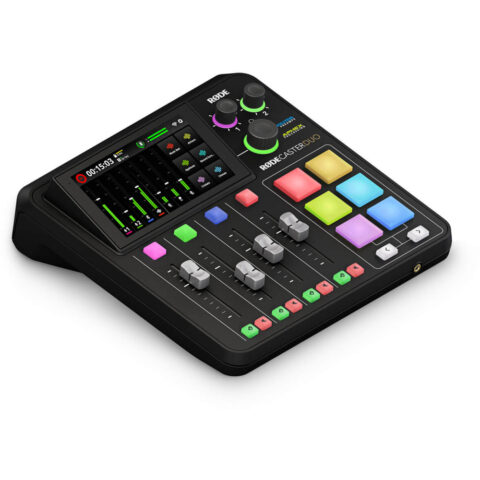
| RODECaster Duo and Pro II | Up to 76 dB | 2 and 4 |
For a passive SM7B or PodMic, the higher-gain end of this table leaves you room to work without cranking the preamp to its limit. For the SM7dB, almost any of these will do, because the microphone contributes up to 28 dB of its own gain. You can compare more models in the audio interfaces range, and our guide to choosing an audio interface explains loopback, monitoring and bus power.
What do I need for a Shure SM7B
An SM7B does not come ready to plug into a computer. A complete chain looks like this:
- An XLR cable. A standard balanced microphone cable from the mic and XLR cables range.
- A preamp with enough clean gain. A high-gain interface, a podcast console, or a modest interface plus an inline preamp.
- A boom arm or stand that can hold its weight at the angle you want.
- Headphones for monitoring, ideally closed-back.
Inline preamps
An inline preamp sits between the microphone and the interface, draws 48 V phantom power from the interface and adds clean gain before the signal reaches the interface's own preamp. The sE Electronics DM1 Dynamite adds +28 dB. The Cloudlifter CL-1 is a similar device rated at up to about +25 dB. Neither powers the microphone itself; a passive dynamic still does not need phantom power.
Adding an inline preamp to an SM7B gets you broadly the same result as buying an SM7dB, just with one more box and cable. If you already own an SM7B, an inline preamp is the lower-cost fix. If you are buying new and your interface has modest gain, the SM7dB keeps the chain tidier. More options sit under inline problem solvers.
Choosing an audio interface for an SM7B
There is no single best audio interface for an SM7B, but look for plenty of manufacturer-rated gain, a quiet preamp and enough inputs for your show. Two-input interfaces such as the Scarlett 2i2 4th Gen and SSL 2 MkII suit one or two hosts. If you need four microphones and several headphone outputs, a podcast console such as the RODECaster Pro II, with up to 76 dB of gain per input, removes the need for inline preamps altogether.
Preamps and interfaces for low-output dynamics
-
 SE Electronics
sE Electronics DM1 Dynamite Microphone Preamp
$159.95 incl. GST Ships in 2-3 business daysAdd to cart -
 Focusrite
 Scarlett 2i2 USB-C Audio Interface (4th Generation)
$289.95 incl. GST Ships in 1-2 business daysAdd to cart -
 Solid State Logic
 SSL 2 MKII USB-C Audio Interface
$434.95 incl. GST Ships in 2-3 business daysAdd to cart -
 RODE
Rode RODECaster Duo Compact Mixer
$677.95 incl. GST Ships in 1-2 business daysAdd to cart
Boom arms and pop filters
Boom arms
At 764 g to 937 g, these are heavy microphones, and a PodMic or SM7B on a light arm will droop. Check the arm's rated payload and include the microphone, mount, windscreen and cable in the total. Elgato rates the Wave Mic Arm LP for up to 2 kg including accessories, and RODE designs the PSA1 for broadcast microphones. Browse boom arms for more.
Pop filters and windscreens
- SM7B: Shure supplies a standard windscreen and the larger A7WS for close-talk use. Shure recommends speaking from about 2.5 to 15 cm away; closer gives more bass.
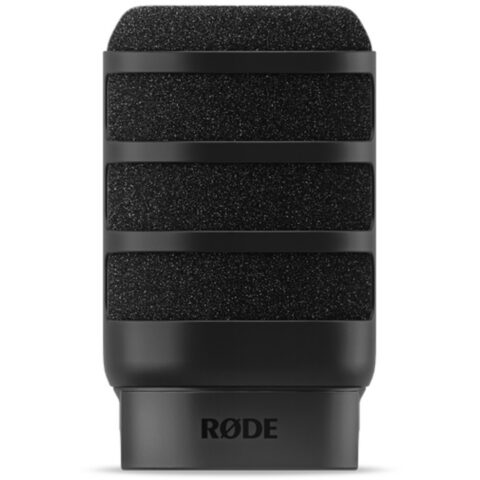
- PodMic: has an internal pop filter. For strong plosives, RODE's WS14 foam pop filter is made to fit it.
- Any microphone: speaking slightly across the capsule rather than straight into it reduces plosives.
Arms and pop filters mentioned
-
 RODE
Rode PSA1 Studio Boom Arm for Broadcast Microphones
$133.95 incl. GST Ships in 1-2 business daysAdd to cart -
 Elgato Systems
Elgato Wave Mic Arm LP (Black)
$162.95 incl. GST On backorder, dispatch date to be confirmedAdd to cart -
 RODE
RODE WS14 Deluxe Pop Filter for PodMic (Black)
$40.95 incl. GST Ships in 3-5 business daysAdd to cart
RODE PodMic vs SM7B: which suits your show
- Choose the SM7dB if your interface has moderate gain, you want a single tidy box, and you are happy to run phantom power.
- Choose the SM7B if you already have a high-gain preamp or console, or you want a passive microphone that never needs power.
- Choose the PodMic if you are equipping two to four seats and want matching broadcast dynamics at a lower cost per seat. Pair it with a high-gain console.
- Choose the PodMic USB if you want to start by plugging straight into a computer. Its internal Revolution Preamp handles the gain over USB, and the XLR output is there for later.
For a wider view of podcast microphones, including condensers and USB options, see our podcast microphone guide, or browse all dynamic microphones.
Questions
Does the Shure SM7dB sound different to the SM7B?
Shure builds both on the same dynamic design with the same 50 Hz to 20 kHz response and the same bass roll-off and presence switches. The SM7dB's preamp is there to add level before the signal reaches your interface. With the preamp bypassed it behaves like an SM7B, and it does not need phantom power in that mode.
Do I need a Cloudlifter or DM1 with an SM7B?
Only if your preamp runs short of clean gain for your voice. If your interface or console offers plenty of gain and stays quiet near the top of its range, you can skip it. If you find yourself running the gain knob at maximum and the recording is still quiet or hissy, an inline preamp such as the DM1 helps.
Can I use phantom power with an SM7B or PodMic?
Neither needs it, because both are passive dynamics. Phantom power is only needed for an inline preamp placed between the microphone and interface, or for the SM7dB when its preamp is switched on. Follow the manufacturer's instructions and use proper balanced XLR cables whenever phantom power is on.
Is a RODECaster enough gain for an SM7B?
RODE rates the Revolution Preamps in the RODECaster Duo and Pro II at up to 76 dB of gain, which is well above the rule-of-thumb figure usually quoted for an SM7B. For most voices that means no inline preamp is needed, though you should still set levels with a test recording.
Sources
Specifications and background were checked against these pages when the guide was last updated. Always confirm compatibility on the product page before ordering.
- shure.com/en-US/docs/guide/SM7B
- content-files.shure.com/Pubs/SM7B/sm7b-specification-sheet-english.pdf
- pubs.shure.com/view/guide/SM7dB/en-US.pdf
- shure.com/en-US/insights/preamp-powerhouse-inside-the-sm7db-microphone
- edge.rode.com/pdf/products/108/PodMic_Datasheet_FA.pdf
- seelectronics.com/products/dm1
- help.elgato.com/hc/en-us/articles/4404864561421-Wave-Mic-Arm-LP-Specifications
- help.rode.com/hc/en-us/articles/6938577981583-What-are-the-R%C3%98DECaster-Pro-II-Duo-s-Revolution-Preamps
- us.focusrite.com/scarlett
- cdn-data.motu.com/manuals/usb-c-audio/M_Series_User_Guide.pdf