Buying guide
Choosing a Podcast Microphone in Australia: USB, XLR or Hybrid
How to choose a podcast microphone for a home room: dynamic or condenser, USB, XLR or hybrid, and what changes when one, two or four people record together.
Short answer For most home rooms, a cardioid dynamic microphone used close to the mouth is the safest podcast microphone choice, because it picks up less room echo and background noise than a condenser. Choose USB if one person records straight into a computer, XLR if two or more people share an interface or mixer, and a hybrid USB plus XLR model if you want to start simple and expand later.
Shopping for a podcast microphone in Australia usually comes down to three questions: what kind of room you record in, how many people talk at once, and what the microphone plugs into. This guide works through each one, with examples from the dynamic microphones and USB microphones we carry.
Dynamic vs condenser for podcasting at home
Most spare rooms, offices and lounge rooms have hard walls, a window and a computer fan somewhere nearby. The microphone type decides how much of that ends up in the recording.
- Dynamic microphones are less sensitive, so distant reflections and background noise produce a smaller signal. They are designed to be used close, which keeps your voice much louder than the room. Many do not need phantom power, though they often need plenty of clean preamp gain.
- Condenser microphones are more sensitive and capture more high-frequency detail. That suits a quiet, treated room, but in an untreated room they also capture more reflections, fans, traffic and keyboard noise.
The difference is not absolute. A condenser used close to the mouth can sound very good, and a dynamic held at arm's length will still sound roomy. Placement matters as much as the type. A practical starting point is roughly 5 to 10 cm from the front of the microphone, with a pop filter or foam windscreen, moving back towards 10 to 15 cm if plosives or boomy bass become a problem.
Polar pattern helps too. A cardioid microphone is most sensitive at the front and rejects sound from the rear, so point the back of the microphone at the noisiest thing in the room, such as a computer or air conditioner. Hypercardioid and supercardioid models reject more from the sides but have a small rear pickup lobe, so their orientation is more critical.
USB vs XLR microphone: which connection suits you
The connection decides what else you need to buy and how easily the setup grows.
| Connection | What you need | Suits | Trade-off |
|---|---|---|---|
| USB | Just a computer; the preamp and converter are inside the microphone | One host recording solo, voice-over, streaming | Hard to expand; two USB microphones on one computer run on separate clocks |
| XLR | An audio interface, mixer, podcast console or recorder | Two to four people, regular shows, future upgrades | More equipment and setup; the interface needs enough clean gain |
| Hybrid USB plus XLR | A computer now, an interface or console later | Starting solo with plans to add co-hosts | Still one microphone per unit; USB and XLR paths may process sound differently |
A point that catches many two-person shows: you can sometimes plug two USB microphones into one computer, but each has its own converter and sample clock. Even at the same sample rate the clocks are not locked together, so the tracks can slowly drift apart over a long recording. For dependable two-person recording, an interface or mixer with two XLR inputs is the more reliable path. Our USB vs XLR microphones guide goes deeper on this.
Podcast microphone options in Australia by type
There is no single best podcast microphone in Australia for every room and budget, but the options fall into clear groups.
Hybrid dynamic microphones
The RODE PodMic USB is a dynamic broadcast microphone with both XLR and USB-C outputs. RODE lists a tight cardioid pattern, an internal pop filter, an integrated swing mount, a high-gain Revolution Preamp for the USB path and onboard APHEX processing, including compression, a noise gate and a high-pass filter. It also adds headphone monitoring.
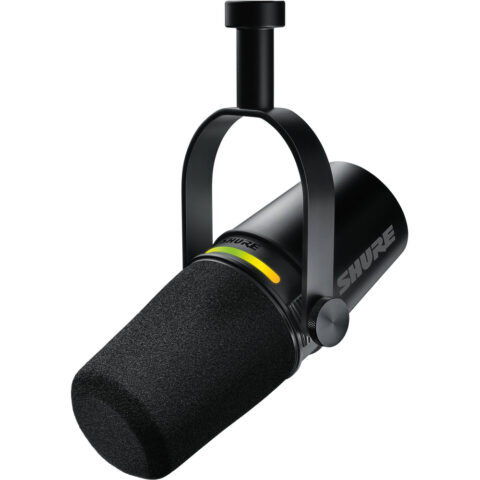
The Shure MV7+ takes a similar approach. Shure describes it as having USB-C and XLR outputs, a 3.5 mm headphone output and onboard processing that includes denoising. The Audio-Technica ATR2100x-USB is a dynamic cardioid with XLR and USB-C outputs, up to 24-bit over USB, and a headphone output with level control.
The Shure MV7i is different again: alongside its own capsule, it has an input for a second microphone or line source and works as a small two-channel USB interface. Shure lists 24-bit/48 kHz audio, onboard processing and up to 60 dB of gain. That suits a solo host who sometimes has a guest in the room.
Hybrid podcast microphones in this guide
-
 RODE
Rode PodMic USB Microphone
$275.95 incl. GST Ships in 1-2 business daysAdd to cart -
 Shure
Shure MV7+ Podcast Microphone (Black)
$453.95 incl. GST Ships in 4-6 weeksAdd to cart -
 Audio Technica
Audio-Technica Consumer ATR2100x-USB Cardioid Dynamic USB/XLR Microphone
$133.95 incl. GST Ships in 2-4 weeksAdd to cart -
 Shure
Shure MV7i Smart Microphone and Interface
$566.95 incl. GST Ships in 1-2 business daysAdd to cart
XLR dynamic microphones
If you already plan to use an interface or podcast console, an XLR-only dynamic is the simplest long-term choice. The original RODE PodMic is a cardioid dynamic with an internal pop filter and swing mount, and it does not need phantom power. The Zoom ZDM-1 is a supercardioid dynamic and the Audio-Technica AT2040 is a hypercardioid dynamic, both with XLR outputs and both aimed at close speech.
These microphones have low output, so they need a preamp with plenty of clean gain. The Shure SM7B and SM7dB also sit in this group, and our SM7B vs SM7dB vs PodMic comparison explains how much gain they need and when an inline preamp helps.
Condenser microphones
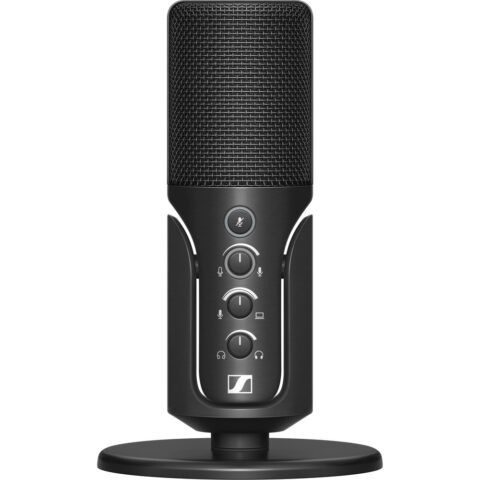
Condensers make sense in a quiet, treated room or for a single narrator who wants more detail. The Sennheiser Profile USB is a cardioid condenser with 16 or 24-bit recording at 44.1 or 48 kHz, a headphone output and a mix control for balancing your voice against computer audio. The RODE NT-USB Mini is a compact USB condenser with a headphone output. The RODE NT1 5th Generation offers both XLR and USB, and RODE lists USB recording up to 192 kHz in 32-bit float. Browse the computer and USB microphones for more.
XLR and condenser microphones mentioned
-
 RODE
Rode PodMic Dynamic Podcasting Microphone
$129.95 incl. GST Ships in 1-2 business daysAdd to cart -
 Zoom
Zoom ZDM-1 Large-Diaphragm Dynamic Mic
$70.95 incl. GST Ships in 1-2 business daysAdd to cart -
 Sennheiser
 Profile USB Microphone
$162.95 incl. GST Ships in 1-2 business daysAdd to cart -
 RODE
Rode NT1 5th Gen Digital Condenser Microphone with XLR Output, USB & DSP (Black)
$332.95 incl. GST Ships in 1-2 business daysAdd to cart
Planning for one, two or four people
One person
A USB or hybrid dynamic plugged straight into a computer covers most solo shows. Buy a hybrid if there is any chance of adding a co-host, so the microphone moves to an interface later instead of being replaced.
Two people
Use two XLR dynamics into a two-input interface or a two-channel podcast console, so both voices share one clock and land on separate tracks. Each person also needs headphones. A two-input interface usually has one headphone output, while podcast consoles often have more. See do you need an audio interface for how to compare inputs, gain and monitoring.
Three or four people
At this size a podcast console or multitrack recorder with four XLR inputs and multiple headphone outputs is the practical route. Use the same microphone model for every seat so voices match, and give each person their own boom arm. Our podcast setup at home guide lays out complete kits for one, two and four people.
Accessories that change the sound
- Boom arm or stand. An arm holds the microphone at a consistent distance and keeps desk bumps out of the recording. Check the arm's rated payload against the microphone plus mount and cable. Browse boom arms.
- Pop filter or windscreen. Reduces plosives on P and B sounds. Several broadcast microphones include an internal filter, and RODE makes the WS14 for the PodMic. See the pop shields.
- Closed-back headphones. One pair per person lets everyone hear levels, noise and clipping without speaker bleed.
- Soft furnishings. A rug, curtains, a couch and a full bookshelf reduce reflections in a way no microphone can.
Questions
Is a dynamic or condenser microphone better for podcasting at home?
In an untreated room a dynamic microphone is usually the safer choice. It is less sensitive, is designed for close use and picks up less echo and background noise. A condenser can sound more detailed, but it rewards a quiet, treated room and will capture fans, traffic and reflections that a dynamic tends to ignore.
Can I record two people with two USB microphones?
Sometimes, but it is not the most reliable method. Each USB microphone has its own clock, so the two tracks can drift out of alignment over a long recording, and some software struggles with two separate devices. Two XLR microphones into one interface or podcast console keep both voices on a shared clock.
Do I need phantom power for a dynamic podcast microphone?
Passive dynamic microphones such as the original RODE PodMic and the Shure SM7B do not need phantom power. Condenser microphones do, and so do active inline preamps and some microphones with built-in preamps, such as the Shure SM7dB when its preamp is switched on.
Is a hybrid USB and XLR microphone worth it?
It is worth considering if you are starting alone but may add co-hosts. You can record straight to a computer over USB now, then connect the same microphone to an interface or console over XLR later. If you already know you will use an interface, an XLR-only microphone avoids paying for USB features you will not use.
Sources
Specifications and background were checked against these pages when the guide was last updated. Always confirm compatibility on the product page before ordering.
- rode.com/en-us/products/podmic-usb
- edge.rode.com/pdf/products/108/PodMic_Datasheet_FA.pdf
- shure.com/en-US/docs/guide/MV7plus
- shure.com/nl-NL/producten/microfoons/mv7i
- docs.audio-technica.com/us/p52830_atr2100x_usb_um.pdf
- sennheiser.com/en-us/catalog/products/microphones/profile-usb-microphone/profile-usb-microphone-700065
- rode.com/en-nl/user-guides/nt1-5th-generation
- rode.com/en-us/about/news-info/xlr-or-usb-microphones-which-is-the-best-for-gaming-and-streaming