Buying guide
Do I Need a Camera Cage? What a Cage Actually Does
What a camera cage is for, when it is overkill, how it compares with an L-bracket, and the mounting standards you will meet: 1/4-20, 3/8-16, ARRI pins, NATO, cold shoe and 15 mm rods.
Short answer You need a camera cage when you want to mount more than the camera's hot shoe and tripod socket can hold: a monitor, a handle, a microphone, a light or external power at the same time. If you shoot stills, or video with just an on-camera mic, a cage is usually overkill and an L-bracket or baseplate does the job with less weight.
So, do I need a camera cage? The honest answer depends on how many things you bolt to the camera and how often you move it between a tripod, a gimbal and your hands. This guide explains what a cage actually does, when you can skip it, and the mounting standards you will meet on every cage, handle and arm in our camera rigs and support range.
What is a camera cage for?
A cage is a metal frame, usually aluminium, that bolts to the camera's tripod socket and wraps around part or all of the body. It does four jobs.
- Mounting points. A camera body has one tripod socket and one shoe. A cage adds dozens of threaded holes, cold shoes and rails, so you can place a monitor, a mic and a light where they balance and do not block the screen.
- Handles. Top and side handles give a lower, steadier grip for handheld work and make it easier to carry a rigged camera between setups.
- Cable control. Many cages have a clamp that holds the HDMI or USB-C plug in place, taking strain off the camera's port when a cable gets tugged.
- Protection and quick release. The frame takes knocks that would otherwise hit the body, and many cages have a built-in Arca-type base that slides straight onto a tripod head or gimbal plate.
A cage does not make the camera shoot better, and it adds weight and bulk. It is a mounting platform, and it earns its place only when you have things to mount.
Do I need a camera cage? A quick check
Work through your real kit list rather than the one you might own next year.
| How you shoot | Cage needed? | Lighter alternative |
|---|---|---|
| Stills on a tripod, switching between landscape and portrait | No | L-bracket |
| Vlogging with one mic in the hot shoe | Usually no | Grip or small baseplate |
| Interviews with a mic, a small light and a monitor | Yes, a half or full cage | Half cage if weight matters |
| External recording to a monitor-recorder | Yes, for the HDMI clamp and monitor mount | Cable clamp on a baseplate |
| Gimbal work with a monitor or wireless transmitter | Often, a light cage | Arca plate plus a short, thin cable |
| Follow focus, matte box or V-mount battery | Yes, with 15 mm rod support | Baseplate with rod clamp |
A cage is overkill when it would carry nothing, when the extra weight tips a small gimbal past its payload, or when a camera-specific grip already gives you the hold you want.
Mounting standards on cages and rigs
Almost every rig part connects with one of the interfaces below. Knowing them stops you buying a handle that cannot attach to your cage.
1/4"-20 and 3/8"-16 threads
These are imperial UNC threads. A 1/4"-20 screw is a quarter of an inch across with 20 threads per inch, the same size as a camera's tripod socket. A 3/8"-16 screw is 3/8 of an inch across with 16 threads per inch, used for tripod heads, heavier handles and monitor arms. Neither is metric, so never force a 1/4"-20 screw into an M6 hole. On their own, both rely on friction to stop an accessory spinning.
ARRI locating pins
An ARRI-style locating mount pairs a central threaded hole, usually 3/8"-16, with two small locating holes beside it. The accessory has matching pins. The screw clamps and the pins stop twisting, which matters for top handles, monitor arms and battery plates that put leverage on a single screw. Patterns sold as "ARRI-style" are not always identical across brands, so check that the handle and cage are listed as compatible.
NATO rail explained
A NATO rail is a short dovetail rail that a NATO clamp slides onto and locks with a lever or screw. It is popular for side handles, top handles and monitor arms because accessories go on and off quickly without tools. The profile is not governed by one published standard, so similar-looking rails can differ slightly. SmallRig's HawkLock rails look similar but use their own push-to-lock accessories, and SmallRig notes the two systems are not automatically interchangeable.
Cold shoe
A cold shoe is a shoe mount with no electrical contacts. It suits light items such as a compact mic, a small LED or a wireless receiver. It holds by friction and a small locking screw, so do not hang a monitor or battery off a single cold shoe. Adapters convert a shoe to a 1/4"-20 or 3/8" thread when you need one.
15 mm rods
Rods carry accessories in front of or behind the camera. 15 mm LWS (lightweight support) uses two 15 mm rods with 60 mm between their centres, and suits mirrorless and compact cinema rigs for follow focus, lens supports and small battery plates. 15 mm studio uses the same rod diameter at wider spacing, and 19 mm rods are thicker for heavy cinema rigs. The diameter and the spacing both have to match your clamps. You can buy 15 mm rods in several lengths.
Parts that use these mounting standards
-
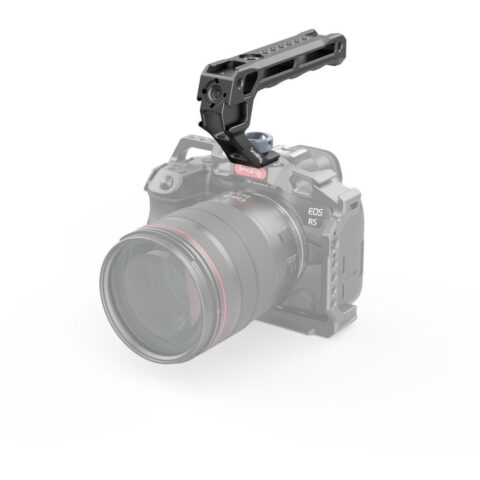 SmallRig
 3765 ARRI Locating Top Handle
$35.95 incl. GST Ships in 4-6 weeksAdd to cart -
 SmallRig
 3766 NATO Top Handle
$37.95 incl. GST Ships in 1-2 business daysAdd to cart -
 SmallRig
 1631 Cold Shoe Adapter with 3/8" to 1/4" Thread(2pcs Pack)
$10.95 incl. GST Ships in 4-6 weeksAdd to cart -
 SmallRig
 Universal Camera Baseplate with 15mm LWS Rod Clamp
$62.95 incl. GST Ships in 4-6 weeksAdd to cart
Camera cage vs L-bracket, half cage and baseplate
These four options overlap, so choose by what you mount most often.
- L-bracket. Wraps the base and one side of the camera with Arca-type dovetails. It is built for stills on a tripod, letting you flip between landscape and portrait without re-levelling. It has few accessory points and little protection. Sony full-frame shooters can look at the SmallRig 3660B L-bracket, or browse tripod plates and L-brackets.
- Half cage. Covers the base and one side, often keeping the camera's own grip usable. It gives you a shoe, a rail and some threaded holes at a fraction of the weight.
- Full cage. Surrounds the body, with mounting points on the top, both sides and the base. This is the choice when you run a monitor, handle, mic and cable clamp together.
- Baseplate. Sits only under the camera, often with a 15 mm rod clamp. It suits rod-based rigs where the camera itself needs little on top.
Camera-specific cages fit most closely because they are cut around your camera's doors and ports. Universal cages, such as the Ulanzi XJ01 foldable cage or the Bright Tangerine Halo with 15 mm LWS support, adjust to different bodies but need more care to line up. If you shoot Sony, our Sony camera cage fit guide lists which cage fits each body.
L-bracket and universal cage options
-
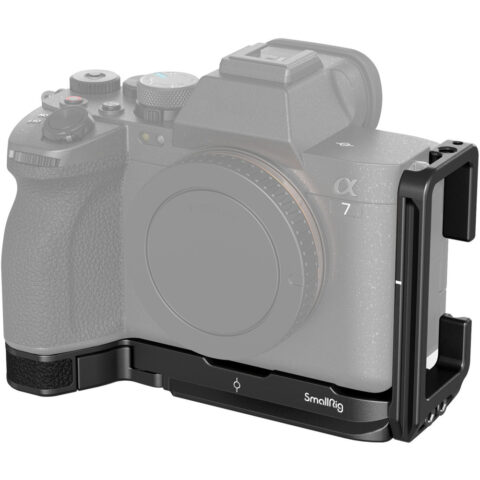 SmallRig
 3660B L-Bracket for Sony Alpha 7R V / 7 IV / 7S III / Alpha 1 / 7R IV / 9 II
$70.95 incl. GST Ships in 4-6 weeksAdd to cart -
 Ulanzi
 XJ01 Uka Universal Foldable Camera Cage
$73.95 incl. GST Ships in 1-2 business daysAdd to cart -
 Bright Tangerine
 Halo Universal Camera Cage (15mm LWS)
$182.95 incl. GST Ships in 2-4 weeksAdd to cart
Camera rig for beginners: a sensible build order
Building a rig in stages keeps it light and saves buying parts you never use.
- Start with the camera, a mic and a tripod plate. Many creators never need more.
- Add a cage when the second accessory arrives. A monitor plus a mic, or a light plus a wireless receiver, is the usual trigger. Browse camera cages by body.
- Add a handle. Match the clamp to your cage: NATO, HawkLock or ARRI locating. See handles and grips.
- Lock your cables. A clamp and a short cable protect the camera's HDMI port. Our camera video cable guide explains micro-HDMI, full HDMI and SDI.
- Add rods and power last. Rods for focus and lens support, then a battery plate for long days. Read V-mount batteries explained before choosing a plate.
Before you mount heavy gear, check the load rating of your tripod head or gimbal, since a full rig can weigh far more than the camera alone. Shoe mount adapters and anti-twist cold shoes are small, low-cost fixes for accessories that keep rotating.
Questions
Does a cage protect the camera if I drop it?
A cage takes knocks and scrapes that would otherwise land on the body, and it can shield corners and the screen hinge in a minor bump. It is not a crash case. A heavy fall can still damage the lens mount, the lens or the internals, so treat protection as a side benefit and choose a cage for its mounting points.
Can I use a cage on a gimbal?
Yes, and many cages have an Arca-type base for that reason. Watch the total weight, because a cage plus a monitor and cables can push a small gimbal past its rated payload. A light half cage, a short thin HDMI cable and a clamp are the usual gimbal combination.
Are NATO rails from different brands compatible?
Mostly, but not always. NATO rails follow a common dovetail shape rather than one published standard, so a clamp from one brand usually fits another brand's rail, with occasional tight or loose fits. SmallRig's HawkLock rails need HawkLock accessories. Checking the listed compatibility before you buy is the safe approach.
What is the difference between 1/4"-20 and 3/8"-16?
Both are imperial threads. The 1/4"-20 is smaller and matches the tripod socket on almost every camera. The 3/8"-16 is larger and stronger, and is used on tripod heads, heavier handles and ARRI-style locating mounts. Many adapters and screws convert between the two.
Sources
Specifications and background were checked against these pages when the guide was last updated. Always confirm compatibility on the product page before ordering.
- arri.com/resource/blob/320202/04f5271d1d21f8c7db4a460d2e871b44/pin-lock-standard-download-data.pdf
- camerarigsetup.com/guides/camera-rig-mounting-standards
- ulanzi.com/en-gb/blogs/knowledges/arri-standard-pins-professional-mounting-guide
- smallrig.com/blog/side-handle-buying-guide-hawklock-nato-screw-mount.html
- smallrig.com/campaigns/HawkLock-Quick-Release-Ecosystem
- smallrig.com/Cage-for-Sony-Alpha-7R-V-7-IV-7S-III-1-7R-IV-3667C.html