Buying guide
ND Filter for Video: Stops, Variable vs Fixed, Thread Sizes
The 180-degree shutter rule, how many stops daylight needs, variable ND and the cross pattern, IRND, thread sizes for popular lenses and when to use step-up rings.
Short answer An ND filter for video lets you keep the shutter at about double the frame rate (1/50 for 25p) and the aperture wide in daylight. In direct midday sun at ISO 100, shooting f/2.8 at 1/50 needs roughly 6 stops of ND. A 2 to 5 stop variable ND suits run-and-gun work, while fixed or IRND filters suit controlled shoots and dark fabrics. Buy for your largest lens thread and step the others up.
Choosing an ND filter for video comes down to four decisions: how many stops you need, whether a variable or fixed filter suits the way you work, whether infrared contamination will matter, and what thread size to buy. This guide works through each one, then points to filters in our neutral density filter range.
Why an ND filter for video matters: the 180-degree rule
The 180-degree rule is a cinematography convention: set the shutter to roughly double the frame rate. That gives each frame a natural amount of motion blur, so movement looks smooth rather than choppy. PolarPro and Hoya both describe it this way, and Hoya adds that a shutter far faster than the frame rate produces jarring, separated motion in a video sequence.
| Frame rate | Shutter speed for 180 degrees |
|---|---|
| 24p | 1/50 (1/48 exact) |
| 25p | 1/50 |
| 30p | 1/60 |
| 50p | 1/100 |
| 60p | 1/120 |
Photographers deal with bright light by raising the shutter speed. Video shooters cannot do that without breaking the rule, and stopping the lens down loses the shallow depth of field many people bought a fast lens for. An ND filter is the only control left: it cuts light evenly across the frame without changing colour (in a good filter) or depth of field.
How many stops of ND filter do you need
Reading ND numbers
Filters are labelled in two ways. The ND factor (ND8) tells you how many times the light is reduced. The optical density (0.9) goes up by 0.3 for each stop.
| ND factor | Density | Stops | Typical use |
|---|---|---|---|
| ND2 | 0.3 | 1 | Fine trim indoors or at dusk |
| ND4 | 0.6 | 2 | Overcast days |
| ND8 | 0.9 | 3 | Open shade, cloudy bright |
| ND16 | 1.2 | 4 | Soft sun, stopped down a little |
| ND64 | 1.8 | 6 | Direct sun at f/2.8 |
| ND1000 | 3.0 | 10 | Long exposure stills, not everyday video |
Stops for Australian daylight
The sunny 16 rule gives a useful starting point. In direct sun at ISO 100, a correct exposure is about f/16 at 1/100. Slow the shutter to 1/50 for 25p and the equivalent is about f/22. From f/22 to f/2.8 is six stops, so you need roughly ND64 or a 6-stop setting. Open to f/1.8 and you need close to 7 stops. Stop down to f/4 and 5 stops will do.
Two things push the number higher. Bright sand, water and pale concrete reflect extra light, and many cameras' log profiles start at a higher minimum ISO than 100. Each doubling of ISO adds one stop to the ND you need, so a profile that starts at ISO 800 needs three more stops than the table above. Haze, cloud and late afternoon light pull the number down.
Variable ND vs fixed ND
A variable ND is two polarising layers in one frame. Turning the front ring changes how much light gets through. A fixed ND is a single piece of glass with one density.
| Variable ND | Fixed ND | |
|---|---|---|
| Speed of adjustment | Turn a ring, no filter change | Swap or stack filters |
| Range | Usually 2 to 5 or 6 to 9 stops in one filter | One strength per filter |
| Colour and evenness | Can shift at the dark end | Generally more consistent |
| Cross pattern | Possible near maximum | No |
| Suits | Events, travel, vlogging, gimbal work | Interviews, narrative, repeatable setups |
The variable ND cross pattern
Because a variable ND works by crossing two polarisers, pushing it to its darkest setting can produce an uneven dark X across the frame. Hoya states this directly for its Variable Density II: near or at maximum density a cross-like dark pattern appears and cannot be removed, as a property of variable ND filters. Wide lenses make it more visible.
Manufacturers deal with this in two ways. Some limit the range. NiSi says its True Color ND-Vario covers 1 to 5 stops with no cross polarisation artefact at its maximum and no vignetting at 16mm full-frame equivalent. Others split the range across two filters, which is why you will see variable NDs sold as 2 to 5 stop and 6 to 9 stop versions. Tiffen also notes that the marks between minimum and maximum on its variable ND are reference points, not calibrated stops, so use the camera's meter or zebras rather than counting marks.
Variable ND filters for video
-
 NiSi
NiSi True Color ND-VARIO Pro Nano 1-5 Stop Variable Neutral Density Filter (82mm)
$236.95 incl. GST Ships in 1-2 business daysAdd to cart -
 7Artisans
 82mm True Colour VND Filter (2-5 Stop)
$63.95 incl. GST Ships in 1-2 business daysAdd to cart -
 Hoya
Hoya 82mm Variable Density II Filter
$289.95 incl. GST Ships in 1-2 business daysAdd to cart -
 Freewell
 Bright Day Variable Neutral Density 1.8 to 2.7 Filter (82mm)
$162.95 incl. GST Ships in 3-4 weeksAdd to cart
IRND: when infrared becomes a problem
Digital sensors are sensitive to some infrared light. Traditional ND filters were designed in the film era, when only visible light mattered, so many cut visible light without cutting infrared by the same amount. With heavy ND, infrared makes up a larger share of what reaches the sensor. The result is often called IR pollution: black fabrics can look pink, reddish or brownish, and the whole image can drift warm.
An IRND filter adds infrared blocking to the ND so both are cut together. Tiffen goes a step further with its NATural ND line, which it says blocks IR, UV and visible light for a more neutral image. Consider an IRND if you often film dark suits or black fabric with heavy ND. How much it matters varies by camera and filter, so test your own body before a paid job.
Fixed ND, IRND and ND kits
-
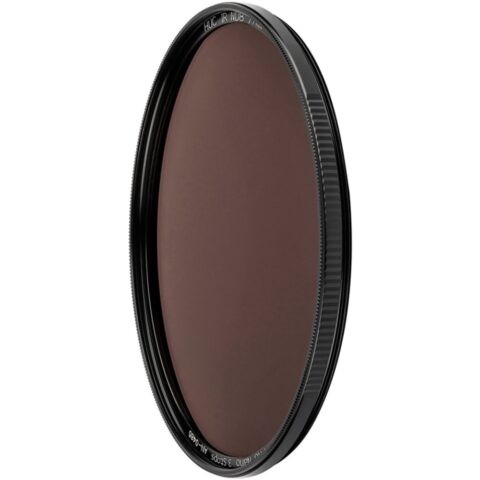 NiSi
NiSi PRO Nano IRND 0.9 Filter 3-Stop (82mm)
$104.95 incl. GST Ships in 2-3 business daysAdd to cart -
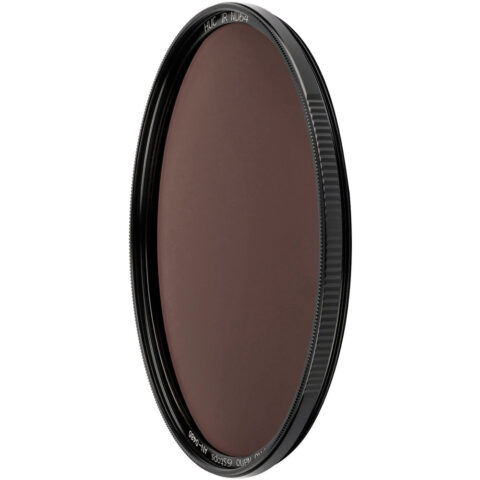 NiSi
NiSi 82mm HUC PRO Nano IRND 1.8 Filter (6-Stop)
$104.95 incl. GST Ships in 2-3 business daysAdd to cart -
 NiSi
NiSi 82mm Swift True Color VND Kit (1-5-Stop VND & 4-Stop ND)
$336.95 incl. GST On backorder, dispatch date to be confirmedAdd to cart
Browse more in variable neutral density and solid neutral density, or the full NiSi range.
What size filter do I need
The filter thread size is printed on the front of the lens barrel or the inside of the lens cap, marked with a diameter symbol. Manufacturer specifications for some popular lenses:
- Sony FE 24-70mm f/2.8 GM and GM II: 82mm
- Sony FE 24-105mm f/4 G OSS: 77mm
- Sigma 18-50mm f/2.8 DC DN Contemporary: 55mm
- Sony E PZ 16-50mm kit zoom: 40.5mm
ND filter for Sony 24-70
Both versions of the Sony FE 24-70mm f/2.8 GM take 82mm filters. Because 82mm is also the largest thread among the lenses most hybrid shooters carry, an 82mm variable ND is a common anchor for a kit.
Step-up rings
A step-up ring screws into a smaller lens thread and presents a larger one, so a single 82mm filter can serve a 67mm, 72mm or 77mm lens as well. It does not change focal length or aperture, and it saves buying the same variable ND several times over. A few cautions:
- Use one slim ring rather than chaining several together.
- Check the widest focal length on wide zooms, where thick frames and stacked filters are most likely to darken corners.
- Avoid step-down rings, which put a smaller filter on a larger lens and invite vignetting.
- Lens hoods usually will not fit over a stepped-up filter.
Step-up rings to 82mm
-
 NiSi
NiSi Brass Pro 67-82mm Step-Up Ring
$32.95 incl. GST Ships in 1-2 business daysAdd to cart -
 NiSi
NiSi Brass Pro 72-82mm Step-Up Ring
$34.95 incl. GST Ships in 1-2 business daysAdd to cart -
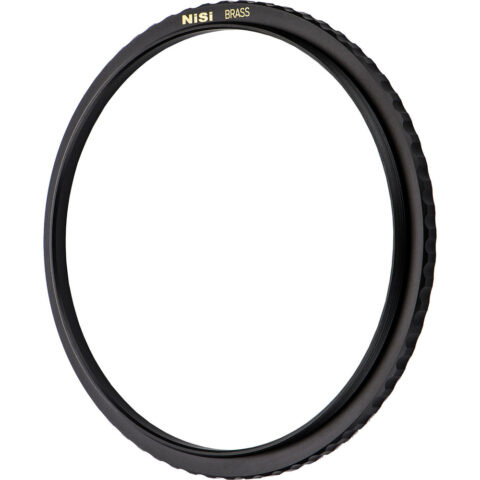 NiSi
NiSi Brass Pro 77-82mm Step-Up Ring
$32.95 incl. GST Ships in 1-2 business daysAdd to cart -
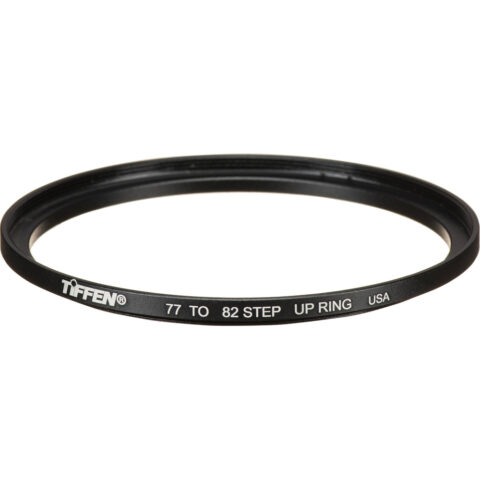 Tiffen
 77-82mm Step-Up Ring
$57.95 incl. GST Ships in 1-2 weeksAdd to cart
See all sizes in our step-up rings category.
Magnetic ND systems
If you swap filters often, a magnetic system replaces threading with an adaptor ring that stays on the lens and filters that snap on. It costs more to set up but speeds up changes, especially when stacking an ND with a mist filter. Our guide to magnetic filter systems compares NiSi JetMag Pro, Freewell, PolarPro Helix and screw-in options in detail. For gimbal cameras with built-in lenses, see the ND section of our DJI Osmo Pocket guide.
Questions
How many stops of ND do I need for video in sunlight?
For f/2.8 at 1/50 and ISO 100 in direct midday sun, about 6 stops, based on the sunny 16 rule. Wider apertures, reflective surroundings and log profiles with a higher base ISO push that toward 7 to 9 stops. For overcast days, 2 to 4 stops is usually enough.
Is a variable ND good enough for professional video?
Many professionals use them for events, documentaries and gimbal work because they save time. The trade-off is possible colour shift and the cross pattern at the dark end. Staying inside the filter's marked range, or choosing one designed to avoid the cross pattern, avoids most problems. Fixed NDs remain more consistent for controlled shoots.
Do I need an IRND filter?
Only if you use heavy ND and film subjects where infrared shows up, such as black fabric, which can turn pink or brownish. With light ND the effect is usually small. Test your camera with a black jumper in sun, with and without the filter, to see whether it matters for your work.
Can I use one ND filter on all my lenses?
Yes, with step-up rings. Buy the filter to fit your largest lens thread, often 82mm, and add a ring for each smaller lens. Check for dark corners at the widest focal length, and use a single ring rather than stacking several.
Sources
Specifications and background were checked against these pages when the guide was last updated. Always confirm compatibility on the product page before ordering.
- hoyafilter.com/product/variable_density_ii
- en.nisioptics.com/news/nisi-introduces-the-1-5-stops-true-color-nd-vario.html
- tiffen.com/pages/variable-nd-edu
- tiffen.com/collections/natural-nd
- polarpro.com/products/luna-ultra-filters
- kolarivision.com/old-style-nds-irnds-everything-in-between
- the-digital-picture.com/Reviews/Lens-Specifications.aspx?Lens=1611
- the-digital-picture.com/Reviews/Lens-Specifications.aspx?Lens=1176
- sigma-global.com/en/lenses/c021_18_50_28/?tab=specifications
- the-digital-picture.com/Reviews/Lens-Specifications.aspx?Lens=1663